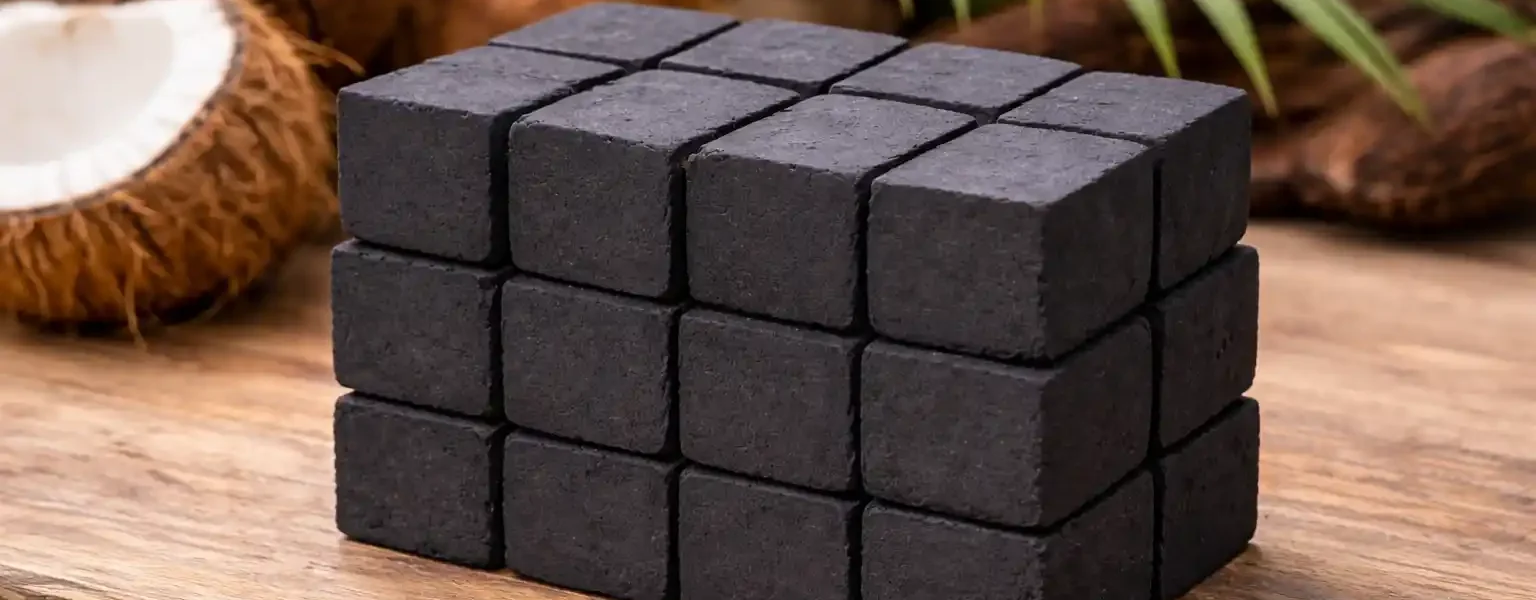
Coconut Shell Briquette Mixture for Durability and Resistance to Breakage

Understanding the right coconut shell briquette mixture for durability is essential for producers aiming to create briquettes that are strong, stable, and resistant to breakage. Durability affects not only product quality but also efficiency during packaging, storage, and transportation. For a deeper explanation of formulation fundamentals, you can read the article on Ideal Composition of Coconut Shell Briquette Mixture. More information about sustainable energy solutions and briquette products can also be found on the main website, jacoid.com, which focuses on environmentally responsible fuel alternatives.
Why Durability Matters in Coconut Shell Briquettes?
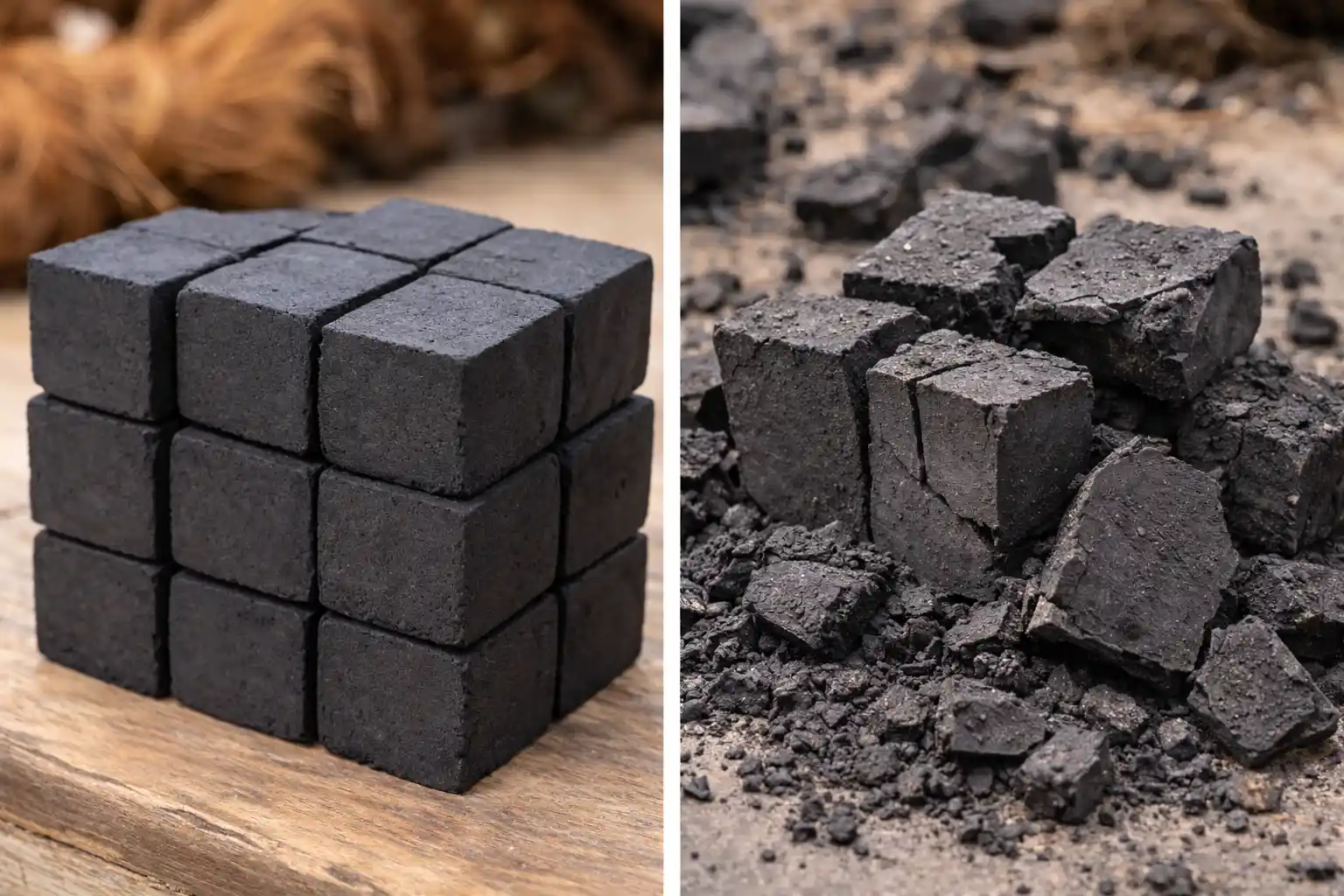
Durability is a key indicator of overall briquette quality, especially for export-oriented markets that demand consistent performance and reliable handling. Briquettes that crack easily tend to generate excessive dust, reduce usable volume, and create serious handling problems for distributors and end users along the supply chain. A strong and compact structure helps ensure that the briquettes remain intact from the production stage through storage, transportation, and final use.
Role of Charcoal Quality in Briquette Strength
High-quality coconut shell charcoal forms the foundation of a durable and reliable briquette structure. Proper carbonization produces charcoal with low moisture levels and stable carbon content, which support stronger bonding during briquette formation. When producers over-carbonize the shells, the charcoal becomes brittle and more prone to fracture during handling. On the other hand, under-carbonized material often leads to weak bonding, uneven density, and inconsistent briquette performance.
Particle Size and Its Effect on Resistance to Breakage
Particle size distribution plays a critical role in the coconut shell briquette mixture for durability and overall structural stability. A balanced mix of fine and medium-sized charcoal particles allows tighter packing during molding and reduces internal air gaps. This natural interlocking effect strengthens the briquette structure, improves resistance to external pressure, and helps prevent cracks during pressing and drying.
Binder Ratio for a Strong Briquette Structure
Producers widely use natural binders, particularly tapioca starch, to improve cohesion and structural stability in coconut shell briquettes. A binder proportion of around 3–6% generally provides sufficient bonding strength to enhance durability without negatively affecting combustion performance. When producers use too little binder, the briquettes become fragile and prone to breakage, while excessive binder can increase ash content and smoke during burning.
Moisture Control and Drying Process
Producers must carefully manage moisture content during the mixing stage to ensure consistent briquette quality. Adequate moisture activates the binder and supports uniform compaction during pressing, while excess water weakens the briquette structure after drying. Proper and consistent drying methods help lock the charcoal particles together, reduce internal stress, and prevent surface cracking that can significantly reduce durability.
Compression Pressure and Final Briquette Density
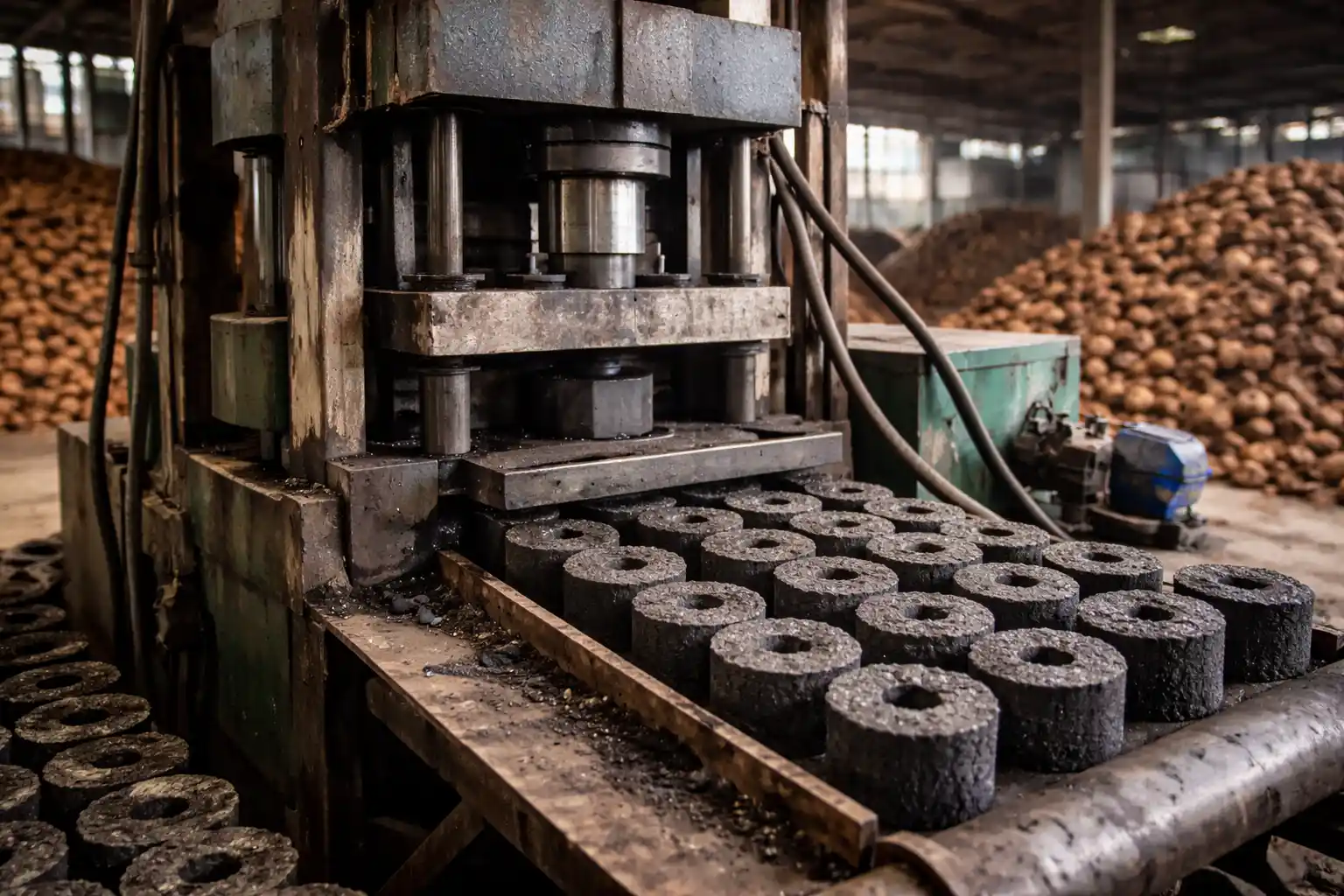
Compression pressure during molding determines how tightly producers pack the briquette mixture and how uniform the final structure becomes. Adequate pressure increases density and resistance to breakage, making the briquettes more durable and stable during handling and transportation. However, producers should avoid over-compression because excessive density can restrict airflow and reduce burning efficiency.
Conclusion
A durable coconut shell briquette results from a well-balanced mixture combined with a carefully controlled production process at every stage. By optimizing charcoal quality, particle size distribution, binder ratio, moisture level, and compression pressure, producers consistently produce durable briquettes with minimal breakage. These qualities make the briquettes suitable for both local consumption and demanding international markets.